Uncategorized

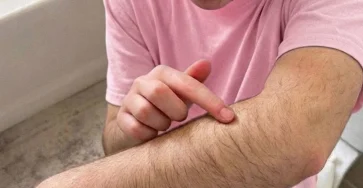
“My daughter’s first boyfriend made her feel ashamed of the natural hair on her arms and suggested she shave it because he was embarrassed to hold her hand at school. I was furious and told her she deserved someone who respected her. But my husband remained surprisingly calm. Instead of confronting the boy, he said, “Invite Tyler over for dinner tomorrow.” I couldn’t understand what he was planning. My fifteen-year-old daughter, Emma, had been dating Tyler for nearly two months. Until that Friday, we genuinely liked him. He was respectful, greeted us warmly whenever he visited, and had even helped my husband carry groceries without being asked. Then everything changed. I found Emma sitting alone on the edge of the bathtub, staring unhappily at her forearms. Her eyes were red from crying. “Emma, sweetheart, what’s wrong?” She hesitated before asking a question that caught me completely off guard. “Mom, is it normal for girls to have hair on their arms?” “Of course it is, honey. Why would you ask?” She lowered her eyes and nervously rubbed her arm. “Tyler said my arms look too masculine. He thinks I should shave them because he feels embarrassed when we hold hands at school.” I couldn’t believe what I was hearing. My daughter was questioning her own appearance because of a thoughtless comment from a boy she cared about. I immediately wanted to contact Tyler’s mother, but Emma grabbed my hand. “Please don’t, Mom. I don’t want to make things worse.” “Emma, nobody should make you feel ashamed of something completely natural.” Her eyes filled with tears again. “But what if he breaks up with me?” That question broke my heart more than anything Tyler had said. Later that evening, Emma came downstairs wearing a thick, long-sleeved sweatshirt despite the warm temperature inside our house. My husband, Daniel, noticed immediately. “Aren’t you warm, sweetheart?” “I’m fine, Dad.” He watched her repeatedly pull the sleeves over her hands. “Emma, is something bothering you?” At first, she insisted everything was fine. But when Daniel asked again, she finally explained what Tyler had said. I expected my husband to become angry. Instead, he listened patiently before asking: “Sweetheart, did you ever want to change anything about your arms before Tyler made that comment?” Emma shook her head. “No.” Daniel gently smiled. “Then don’t let someone else’s opinion convince you that you need to.” He kissed her forehead and continued clearing the dinner table. I followed him into the kitchen. “That’s it? You’re not going to say anything to Tyler?” “Emma is already upset,” he replied. “Getting angry won’t help her feel better about herself.” I wasn’t convinced. The following morning, I overheard Daniel speaking on the phone. “Sunday evening at six? Perfect, Tyler. We’ll see you then.” I waited until he ended the call. “Daniel, please tell me you didn’t just invite that boy to our house.” He looked completely relaxed. “I invited him for dinner.” “Are you planning to embarrass him in front of Emma?” “Absolutely not.” “Then why invite him?” Daniel glanced toward our daughter’s bedroom. “Because Emma needs to understand something important about relationships.” I folded my arms. “And you think dinner is going to teach her that?” He gave me a small smile. “Just make sure there’s enough food for four.” Sunday evening arrived. At exactly six o’clock, the doorbell rang. Tyler stood on our porch wearing a blue sweatshirt and holding a bag of cookies. “Good evening, Mrs. Miller,” he said politely. “My mom told me never to arrive empty-handed.” I thanked him and invited him inside. Emma appeared at the staircase, looking nervous. Daniel greeted Tyler warmly, as though nothing unusual had happened. But as we sat down for dinner, I noticed my husband watching something I hadn’t paid attention to before. And when Tyler reached across the table, his sleeve slipped upward for just a moment. What Emma noticed next would completely change the way she understood his behavior…Full story in 1st comment ” Voir moins

Teen Girl’s First Boyfriend Made Her Cry over Her Arm Hair – Instead of Getting Angry, Her Father Invited Him…
Uncategorized

For nearly twenty years, my mother made sure a homeless boy living near our house always had something to eat, even when our own family struggled financially. After her funeral, that same boy—now a successful, well-dressed man—held my hands and whispered, “Your mother made me promise to keep something from you before she passed away.” What he revealed next changed everything I thought I knew about my childhood. I was only eight when Gabriel first appeared near the abandoned dumping ground behind our neighborhood. He was around seventeen or eighteen, with worn-out clothes, no family to turn to, and nowhere safe to sleep. My father had recently passed away, leaving Mom to raise my younger brother and me while struggling to pay the bills. Money was painfully tight. Some evenings, our dinner consisted of little more than vegetable soup and bread. Yet no matter how difficult things became, Mom prepared an extra meal for Gabriel every afternoon. Sometimes she gave him roasted chicken while we ate plain soup. Other times, she carried him freshly baked bread while claiming she wasn’t hungry. As a child, I couldn’t understand her generosity. I only knew that someone outside our family seemed to receive the best of what little we had. One afternoon, the delicious smell of apple pie filled our kitchen. It was my favorite dessert, and I hadn’t tasted it in months. I hurried downstairs, hoping we were finally having something special. But Mom was already wrapping the pie to take outside. “Are we having apple pie tonight?” I asked excitedly. She shook her head. “Not tonight, sweetheart. This one is for Gabriel.” My excitement disappeared. “But Mom, why does he always get the good food? What about us?” Tears filled my eyes. I was grieving my father, missing the life we’d once had, and desperately hoping my mother would understand. Instead, her expression became stern. “Don’t speak about Gabriel that way again.” I stood there, stunned. Then she walked outside with the pie. From that moment, I convinced myself that Gabriel had somehow taken my place in her heart. Whenever I passed him on my way home from school, I looked away. Sometimes he waved or tried to start a conversation. Once, he even offered me a small wooden bird he’d carved himself. I refused it. He never argued. He simply continued treating me kindly, even when I made it clear that I didn’t want his friendship. As the years passed, my resentment only deepened. Eventually, Gabriel disappeared from the neighborhood. Mom never explained where he’d gone. After graduating from high school, I moved to another city and began building a life of my own. My relationship with Mom grew distant. We occasionally spoke on birthdays and holidays, but there were years when our conversations barely lasted a few minutes. Then, one afternoon, I received a devastating phone call. Mom had suffered a serious stroke. The hospital warned me that her condition was critical. I rushed to her bedside. She looked fragile and exhausted, barely able to speak. I took her hand. “I’m here, Mom. I’m sorry I stayed away for so long.” Her fingers tightened weakly around mine. I promised to look after everything, including the house and any remaining bills. Then she struggled to whisper something. “Please… don’t abandon Gabriel.” I froze. After all these years, she was still thinking about him. And Gabriel wasn’t even there. A familiar ache returned to my chest. But I couldn’t refuse my mother’s final request. “I promise,” I whispered. She passed away later that day. After the funeral, I cooked a warm meal, packed some bread, and drove to our old neighborhood. I assumed Gabriel might still be living nearby and wanted to fulfill my promise by checking on him. But when I arrived outside Mom’s house, something unexpected caught my attention. A luxurious black SUV was parked along the curb. Beside it stood a handsome, clean-shaven man wearing an expensive dark coat. He watched me approach with tears gathering in his eyes. “I was starting to think you wouldn’t come,” he said quietly. I studied his face. Something about his expression felt strangely familiar. Then recognition struck. “Gabriel?” He nodded. I couldn’t believe it. The homeless teenager I’d remembered for decades was now standing before me looking like a successful businessman. I glanced at his vehicle, then back at him. “I brought you dinner,” I said awkwardly. “But Gabriel… what happened? How did your life change so much?” He looked toward my mother’s house. His expression grew serious. “There’s something you need to understand about your mother.” My heart began racing. “What do you mean?” He reached for my hands. “Before she passed away, she begged me not to tell you a secret until the right moment.” I stared at him. “What secret?” Gabriel took a deep breath. “It concerns your father, your mother, and something that happened long before you ever met me.” Then he opened the back door of his SUV and reached for an old metal box. And when I saw what was inside, I realized my mother had been hiding something from me for more than eleven years. The full story continues in the first comment below. 👇” Voir moins

For twenty years, my mother made sure the homeless boy living behind our house never went hungry. After her funeral,…

Uncategorized

“Dad. Please don’t call 911! I didn’t do anything!” But he believed my sister’s lies and let the police take me away. For 18 months in prison, not a single family member came to see me. The day I was finally released was the day they lost everything… “Dad, please don’t call 911! I didn’t do anything!” I screamed, but his finger was already pressing the screen. My sister stood behind him in the hallway, wrapped in a white sweater, crying into her hands like a perfect victim while the shattered glass from Dad’s office safe glittered across the floor. The safe was open. The charity account files were gone. And the laptop on Dad’s desk showed a transfer request with my name typed into the login field. “You stole from your own father,” Dad said, his voice colder than the marble under my bare feet. “I didn’t,” I whispered. “Check the cameras. Check the timestamps. Check anything.” My sister, Lena, lifted her red eyes. “She threatened me last week. She said she deserved half the business.” “That’s a lie.” Lena flinched like I had hit her. “See? She’s doing it again.” Mom stood at the stairs, not crying, not defending me. My brother Grant leaned against the wall with his arms crossed, wearing the smug little smile he used whenever I lost. For years, I had been the quiet daughter. The one who fixed payroll mistakes, handled vendor disputes, cleaned up Dad’s contracts, and never asked for credit. Lena was the favorite. Grant was the heir. I was the useful one. Two officers arrived eleven minutes later. Dad pointed at me. “She broke into my safe,” he said. “She tried to steal two hundred thousand dollars from our foundation.” I looked at him one last time. “You know me.” He looked away. When they cuffed me, Lena stepped closer. Her tears were gone now. Her lips barely moved. “You should’ve stayed small, Claire.” That was when I understood. This wasn’t panic. This was planned. Eighteen months followed. Eighteen months of concrete walls, metal trays, women crying in the dark, and my family pretending I had died. Not one visit. Not one letter. Not one birthday card. My father let my apartment be cleaned out. My mother donated my clothes. Grant took my car. Lena posted pictures from charity galas wearing my grandmother’s pearls. But prison did one thing for me. It made the world very quiet. And in that quiet, I remembered everything: every password Dad reused, every hidden company file I had backed up, every irregular transfer I had noticed before the night I was arrested. They thought I was powerless. They forgot I had built the system they used to frame me….To be continued in C0mments 👇 Voir moins

“Dad. Please don’t call 911! I didn’t do anything!” But he believed my sister’s lies and let the police take…

Uncategorized

My Husband Was Asking the Judge for Our House and Full Custody of Our 6-Year-Old Daughter When She Quietly Pulled Out a Little Purple Phone and Said, “Your Honor, Mom Doesn’t Know I Have This.” The Judge Asked Her to Play It—and Suddenly, No One in the Courtroom Said a Word. “Your Honor, I want the house, full custody of our daughter, and an order keeping my wife away from both,” my husband declared, smiling as though he had already won. Then our six-year-old daughter stood up, pulled a tiny purple phone from her dress pocket, and whispered, “Your Honor, Mom doesn’t know I have this.” The courtroom fell silent. My name is Claire Bennett. Until three months earlier, I believed my husband, Daniel, was a successful businessman and a loving father. I was wrong about both. Daniel had spent eleven years building a comfortable life using my inheritance, my credit, and my unquestioning trust. When his construction company began losing money, he blamed me for our problems. Then I discovered his affair with Vanessa, his twenty-eight-year-old office manager. When I confronted him, he didn’t apologize. “You’ve been useful, Claire,” he said coldly. “But useful isn’t the same as necessary.” Two weeks later, he filed for divorce. His petition accused me of emotional instability, financial irresponsibility, and neglecting our daughter, Lily. Every accusation was a lie. But Daniel had money, expensive attorneys, and a mother who was perfectly willing to testify against me. At the temporary custody hearing, my mother-in-law, Eleanor, dabbed imaginary tears from her eyes. “Claire screams constantly,” she testified. “Poor Lily is terrified of her.” Daniel lowered his head, pretending to be devastated. I sat quietly beside my attorney, Rebecca Hayes, while the man I had loved tried to destroy my reputation. Daniel even produced photographs showing Lily crying beside an overturned dinner plate. “Her mother did this,” he told the judge. My stomach twisted. I remembered that evening. Daniel had deliberately frightened Lily, then photographed her tears. But I had no recording of it. What Daniel didn’t understand was that I had spent seven years working as a forensic accountant before becoming a stay-at-home mother. And during our marriage, I had quietly maintained copies of our financial records. Three weeks before the hearing, I discovered transfers from our joint accounts into a company controlled by Vanessa. I had already given Rebecca the bank statements. Still, financial misconduct alone wouldn’t prove Daniel’s custody accusations false. That required something else. Something I never expected my little girl to carry into court. As Lily approached the judge’s bench, Daniel’s confident smile disappeared. Because the moment he saw that purple phone, his face turned white….To be continued in C0mments 👇 Voir moins

PART 2: THE SECRET HE NEVER EXPECTED “Where did she get that?” Daniel demanded. Judge Margaret Collins raised one hand.…

Uncategorized

My husband’s family never knew I had once been an MMA champion. At my mother-in-law’s BBQ, my brother-in-law poured beer over my head. My husband stood up and told him to apologize to me. He laughed, shoved my husband, then started a heated argument. He told me to sit down because it didn’t concern me. Then he grabbed my wrist… and that’s when my sister-in-law started screaming. The beer soaked my hair like cold rain, while laughter spread across the backyard. I didn’t move, because the last man who mistook my silence for weakness had left a cage with a broken ego and a court order. Derek, my brother-in-law, stood above me with an empty can in his hand and a grin full of teeth. “Oops,” he said. “Guess the princess melted.” His mother, Diane, gave a delicate little laugh from her patio chair. “Claire, don’t be dramatic. It’s only beer.” My husband, Ryan, immediately rose from his chair, “Apologize to my wife.” The backyard went quiet except for the sizzling ribs on the grill. Derek was bigger than Ryan by fifty pounds, all gym muscles and cheap confidence. He had spent the whole afternoon calling Ryan “whipped,” calling me “soft,” and telling everyone I looked like the kind of woman who cried when a door slammed. I wiped beer from my cheek with a napkin. “Derek,” Ryan said, voice shaking with fury, “apologize. Now.” Derek laughed, stepped closer, and sh0ved him hard in the chest. Ryan stumbled backward into the cooler. Ice spilled across the wooden deck. “Or what?” Derek sneered. Ryan came forward again. “You don’t hum:iliate her.” Derek responded with another insult, raising his voice until everyone around the barbecue stopped talking. I watched the exchange without saying a word. Something inside me became remarkably still. Not because I was frightened. Not because I wanted to fight. But because I recognized that familiar tension from my years inside the MMA arena, when thousands of spectators shouted and I could hear nothing except my own breathing. I stood up. Derek turned toward me and pointed. “Sit down, sweetheart. This doesn’t concern you.” I looked at Ryan. His expression was tense, but his eyes met mine with complete understanding. He knew my history. He had always known. And he understood that I had no intention of turning a family argument into something worse. Derek stepped closer. His smile widened, “You gonna cry now?” I didn’t move. I simply looked at him, calm and composed. And that was when my sister-in-law Marissa suddenly screamed. “Derek, stop!” Everyone turned to her. Marissa stood by the patio door, pale, phone trembling in her hand. On the screen was a paused video: me, ten years younger, hair braided tight, gold belt around my waist, standing over a defeated opponent while the announcer shouted my old name. Evelyn “The Quiet Storm” Carter. Former national MMA champion. Derek looked from the phone to me, confused. I looked at his hand on my wrist and said softly, “You have three seconds.”…To be continued in C0mments 👇” Voir moins

My husband’s family never knew I had once been an MMA champion. At my mother-in-law’s BBQ, my brother-in-law poured beer…
Uncategorized

My husband looked at three clean baby bottles, folded laundry, and our five-month-old daughter asleep against my chest, then told me that if living there was too much for me, I should “take the mess somewhere else.” He had no idea that I was about to take those words far more seriously than he ever intended. But the most dangerous thing Grant had forgotten was that maternity leave had not erased the woman I had been before Ivy was born. My name is Emily, and the day Grant underestimated me was the day he destroyed himself. “Lower your voice.” That was all I said. Ivy had fought sleep for nearly forty minutes. Her cheek was warm against my collarbone. One tiny fist was tucked beneath her chin. Grant dropped his keys into the bowl by the door. “I’m speaking normally.” “You’re not.” He gave me that short laugh. The one that meant the conversation was already finished in his mind. “So now I have to whisper in my own house?” “She just fell asleep.” “There.” He gestured toward me. “Everything revolves around keeping her asleep.” I stared at him. “We have a five-month-old baby.” “I know how old my daughter is.” “Then why are you acting surprised that she needs things?” His jaw tightened. Then he looked past me. At the bottles. The sterilizer pieces. The basket of clean baby clothes. “The house used to feel calm.” I looked around the kitchen. The counters had been wiped. The dishwasher was running. Dinner ingredients were already thawing. Three bottles were drying because our baby needed bottles. That was the disaster. “If you want calm,” Grant said, “create it.” My arms tightened around Ivy. “I’m trying.” “Are you?” His voice wasn’t louder. That somehow made it worse. Then he finally said what had been hiding underneath months of little comments. “Sometimes I think Ivy is becoming an excuse.” I actually stared at him. “An excuse for what?” “For everything.” The house. My exhaustion. The things I forgot. The places I no longer wanted to go. The feeding. The pumping. The naps. The schedule. I looked down at our daughter. “She’s a baby.” “I know that.” “No. I don’t think you do.” Grant rubbed his hands over his face. He said he had come home early because his meeting was canceled. He thought we could have a “normal afternoon.” Normal. I knew exactly what that meant. The life before Ivy. Dinner at seven. Bare counters. Quiet music. No crying. No bottles. No interruptions. Before Ivy, I had worked fifty-hour weeks. For thirteen years, I had worked in corporate financial planning. I built liquidity models. Forecasted operating needs. Advised executives on risk. Grant used to introduce me at parties as “the frighteningly smart one.” Then Ivy was born. My paycheck temporarily stopped. And somehow, in Grant’s mind, everything I had ever been disappeared with it. The week before, when our mortgage payment came out of the joint account, he had said, “Good thing my income is covering everything right now.” Two weeks earlier, he had joked, “Do you remember what earning money feels like?” I kept translating those comments into kinder meanings. Stress. Work pressure. Exhaustion. Adjustment. Until that afternoon. Grant looked at me holding our daughter and asked the question that finally made something inside me go completely quiet. “Where would you even go without a salary?” I didn’t remind him about my thirteen-year career. I didn’t mention the savings accounts with my name on them. I didn’t mention the brokerage account I had opened before we met. I didn’t mention the vested shares. I simply adjusted Ivy against my chest. “Okay.” Grant blinked. “What?” “Okay.” His face changed. He had expected tears. An argument. Another promise that tomorrow the counters would be empty. Instead, I turned toward the stairs. Behind me, Grant said my name. “Emily.” I stopped. “You’re being dramatic.” I looked back at him. “No,” I said quietly. “I think I’ve been dramatic for months.” His eyebrows pulled together. “What does that mean?” I held his gaze. “It means I kept inventing nicer versions of what you were saying.” Then I carried Ivy upstairs. And for the first time, Grant looked genuinely confused. Because he still thought I was just upset. He had no idea what I had finally understood. …FULL STORY IN THE COMMENT 👇👇👇 ” Voir moins

My Husband Told Me To Take My Mess Somewhere Else. So I Took My Bottles, My Career, And My Self-Respect—and…

Uncategorized

My sister adopted a five-year-old girl after spending eight heartbreaking years trying to become a mother. But just two weeks after bringing the child home, she appeared at my door sobbing, clutching an envelope. “Claire, you need to sit down. I found out something about Ellie, and I don’t know how to tell you.” My heart nearly stopped. “What’s wrong? Is Ellie hurt?” “No, she’s safe. She’s with Tom.” “Then why are you crying?” Nora’s hands trembled as she pulled several documents from the envelope. “Remember how the adoption agency said nobody knew who Ellie’s biological parents were?” I nodded. “Well, Claire… that story wasn’t true.” Then she showed me a report. And when I saw the name of the hospital where Ellie had been born, I felt the blood drain from my face. **It was the same hospital where, five years earlier, doctors had told me my newborn daughter had died.** *** My sister Nora and I had always been incredibly close. We shared childhood secrets, supported each other through difficult relationships, and celebrated every important milestone together. So when Nora and her husband, Tom, spent eight years struggling to have a baby, I witnessed nearly every painful moment. The medical appointments. The disappointing results. The hopeful mornings that ended in tears. Eventually, Nora admitted she was beginning to lose hope. “I don’t think I’ll ever become a mother,” she whispered one evening. I took her hand. “Have you thought about adoption?” She looked uncertain. “What if I can’t love a child who isn’t biologically mine?” I squeezed her fingers. “Nora, being a mother isn’t just about giving birth. It’s about loving a child, protecting them, and making them feel safe.” She thought about my words for a long time. Eventually, she and Tom began the adoption process. And when they were finally introduced to Ellie, everything changed. Ellie was five years old. She had beautiful dark curls, enormous brown eyes, and the sweetest little smile. Nora fell in love with her almost immediately. Two weeks before that terrible afternoon at my kitchen table, the adoption was finalized. My sister finally had the daughter she’d dreamed of raising. I should have felt nothing but happiness. And I was happy for her. But meeting Ellie also reopened a wound I’d carried for five years. Because once, I had been a mother too. Five years earlier, I’d given birth to a premature baby girl. I’d named her Lucy. The delivery had been frightening, and doctors rushed my daughter to intensive care almost immediately. I saw her for only a few seconds. I remembered her tiny hand moving beside her face. I remembered asking the nurse whether I could hold her. “Not yet,” she told me gently. “We need to stabilize her first.” I spent the night praying I’d soon have my baby in my arms. But the following morning, a doctor entered my hospital room with devastating news. Lucy hadn’t survived. I went home without my daughter. All I had left were a few hospital keepsakes and the little identification bracelet with her name printed on it. For years, I kept that bracelet in a small box beside my bed. Sometimes, I’d open it and imagine the girl Lucy might have become. Would she have inherited my curly hair? Would she have my smile? Would she have the same tiny dimple in her left cheek? I never found the courage to try having another baby. The thought of experiencing that grief again was too frightening. So when Nora introduced me to Ellie, I struggled to control my emotions. Because the little girl standing in front of me looked astonishingly familiar. Her curls were dark and thick. Her eyes were large and expressive. And when she smiled, a tiny dimple appeared in her left cheek. Exactly where mine had been when I was a child. Nora laughed happily. “Claire, isn’t she adorable? She even looks like she belongs in our family!” I forced a smile. “She certainly does.” But later, alone in my car, I cried. Ellie was the age Lucy would have been. And she looked remarkably like the daughter I’d spent years imagining. Still, I never allowed my grief to interfere with Nora’s happiness. I visited often. I brought Ellie little gifts. And before long, she’d become attached to me. “Auntie Claire!” she’d shout whenever I arrived. Then she’d run to find her favorite hair ribbons. “Can you do my hair?” “Of course, sweetheart.” “Two pigtails. Not one!” I’d laugh and pull out a chair. “Yes, ma’am.” “And don’t make them too tight!” Those small moments became precious to me. I loved hearing her chatter while I brushed her curls. Sometimes, for just a second, I wondered what it might have felt like to do the same thing for Lucy. But I reminded myself that Ellie was Nora’s daughter. And I was lucky to be her aunt. Then, exactly two weeks after Ellie came home, everything changed. That afternoon, someone knocked urgently on my front door. When I opened it, Nora stood on the porch looking terrified. Her eyes were swollen. Her face was pale. She held a large envelope tightly against her chest. “Nora? What’s happened?” She tried to answer, but her voice broke. “Claire, please. Can we sit down?” My stomach tightened. “Where’s Ellie?” “She’s home with Tom.” “Is she okay?” “Yes. She’s fine.” “Then tell me what’s wrong!” Nora stepped inside and followed me into the kitchen. She sat at the table, but she couldn’t stop trembling. For several moments, she simply stared at the envelope. Finally, she looked up. “Claire, remember what the adoption agency told us about Ellie’s past?” I nodded slowly. “They said she entered care as an infant and nobody could identify her biological family.” Nora swallowed. “That information wasn’t accurate.” I frowned. “What do you mean?” “Tom and I asked for a review of some missing medical records. The agency discovered inconsistencies in her original paperwork.” My heart began beating faster. “What kind of inconsistencies?” Nora opened the envelope. She pulled out several documents and placed them on the table. “Some of Ellie’s earliest records were connected to a hospital.” “So?” Nora looked at me with tears in her eyes. “Claire, it’s the hospital where you delivered Lucy.” I stared at her. “That doesn’t mean anything.” “I know.” “Hundreds of babies are born there. It could be a coincidence.” “That’s what I thought too.” She pulled out another page. “The dates matched as well. And there were problems with the newborn identification records.” A terrible feeling crept over me. “Nora, what are you trying to say?” She covered her mouth. “When the caseworker noticed the similarities, they suggested checking for a possible biological connection.” I suddenly remembered the cheek swab I’d agreed to provide the previous week. Nora had explained that it might help clarify Ellie’s family medical history. At the time, I’d thought nothing of it. Now my hands began shaking. “What did they find?” Nora started crying. “Claire, I didn’t want to believe it either.” She pushed the final document toward me. I looked down. There were two names printed on the report. Mine. And Ellie’s. Underneath was a preliminary genetic comparison. I began reading. Then stopped. I read the conclusion again, unable to understand what I was seeing. The results suggested a biological parent-child relationship. My breath caught. I looked at Nora. “No…” She nodded through her tears. “Claire, I’m so sorry.” I pushed my chair back. “No. My daughter died. I have her death certificate.” “I know what they told you.” “Then this has to be a mistake!” Nora reached for my hand. “That’s why they want an independent test. We still need confirmation.” I stared at the papers. My heart was pounding so hard I could barely hear her. For five years, I’d mourned a little girl named Lucy. For two weeks, I’d been brushing the hair of a little girl named Ellie. And now my sister was telling me that they might be the same child. Nora lowered her head and whispered the words that shattered everything I thought I knew. **“Claire… I think Ellie might be the daughter you were told had died.”** I couldn’t speak. Then Nora began sobbing. “Please forgive me. I had no idea when we adopted her.” And as I stared at the report, one horrifying question filled my mind. If Ellie really was my Lucy, who had told me my baby was dead—and how had she ended up being adopted by my own sister five years later? Full story continues in the first comment. 👇 Voir moins

A Woman Adopted a 5-Year-Old Girl Because She Couldn’t Have Children – Two Weeks Later, She Came to Her Sister…

Uncategorized

The room fell silent when my daughter-in-law dropped a mountain of dirty dishes in front of me and snapped, “Please, honey.” Everyone laughed. My son just stared at the table. I washed every plate, dried every glass, and said nothing. But that night, I called my attorney. “I want every document reviewed.” Vanessa thought she’d humiliated a powerless old man. She had no idea what she had just triggered. The room went silent when my daughter-in-law placed a stack of dirty dishes in front of me. Then she smiled at her colleagues and said, “Please, honey.” Her tone wasn’t a request. It was an order. I looked at the plates smeared with sauce, the greasy glasses, and the silverware covered in dried food. Around the restaurant table sat six of my daughter-in-law’s coworkers, all dressed in expensive business clothes. My son, Daniel, sat beside her. He lowered his eyes. “Of course,” I said. I gathered every dish. Someone laughed. “Your father-in-law is so helpful,” one woman joked. My daughter-in-law, Vanessa, smiled proudly. “He likes feeling useful.” I carried the dishes into the kitchen. Every step felt heavier than the last. For thirty-two years, I had built Harrison & Cole Logistics from a two-truck operation into a company worth millions. I had raised Daniel after his mother died. I had paid for his university, his first apartment, and eventually the down payment on the house where he now lived with Vanessa. And now, in front of strangers, I was being treated like hired help. I washed every plate. I dried every glass. I stacked everything perfectly. Then I returned to the table. Vanessa didn’t even look at me. “Good,” she said. I nodded. Then I sat beside Daniel. He finally whispered, “Dad, don’t make a scene.” I looked at him. “I wasn’t planning to.” After dinner, I drove home alone. At 9:14 p.m., I entered my study, closed the door, and opened the locked drawer beneath my desk. Inside was a folder marked: HARRISON FAMILY TRUST — CONFIDENTIAL I called my attorney. “Mr. Cole?” he answered. “I need you to review every document involving my company, my estate, and the Harrison Family Trust.” There was a pause. “Tonight?” “Tonight.” “Did something happen?” I looked through the window at the dark city. “Yes.” I remembered Vanessa’s smile. I remembered Daniel’s silence. Then I said quietly, “They just made a very expensive mistake.” Because Vanessa thought she had humiliated an old man. She had no idea she had just awakened the person who could take everything she believed belonged to her. –To be continued in C0mments 👇 Voir moins

PART 2 Three days later, Vanessa invited me to lunch. She was suddenly sweet. “Dad, I hope you weren’t offended.”…
Uncategorized

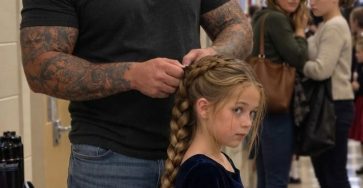
Everyone at school had noticed Goldie’s extraordinary hair. It fell well past her knees. What nobody understood was why her father refused to let her cut it—even though Goldie herself seemed to struggle with it every day. Then, at the school concert, she finally explained. “I asked Dad to cut it,” she said quietly. “He told me we have to wait until I’m seventeen.” And for the first time, we watched her father’s composure disappear. My daughter was in Goldie’s class, so I had seen them together countless times. Her father attended nearly every school event. He usually arrived straight from work, carrying a small mirror, a brush, ribbons, and hairpins. Before concerts or performances, he would sit Goldie down in the hallway and carefully style her enormous length of hair himself. French braids. Ribbons. Perfectly placed pins. By the time he finished, everything looked immaculate. Other parents loved watching him. “What a wonderful father.” “My husband couldn’t make a simple ponytail.” “You can tell how much he adores her.” I understood why people found it touching. But whenever I watched Goldie, I noticed something else. The hair seemed exhausting for her. Her braid caught against the back of classroom chairs. During PE, she sometimes held it with one hand while running. Once, in the cafeteria, I watched her gather the entire length into her fist simply so she could lean forward and eat without it getting in the way. She was only nine. And every time I saw her struggling, I wondered the same thing. Why not simply cut it? The question finally came up publicly on the evening of the school concert. Parents and children were gathered in the corridor waiting for the auditorium doors to open. As usual, Goldie’s father was near the window doing her hair. He worked carefully, weaving the long strands into an elaborate braid before securing everything with pins. When he finished, Goldie jumped up and hurried toward the other girls who were already wearing their costumes. Her father began putting everything back into his bag. That was when one mother spoke. “Someone really should have taken that girl to a proper hairdresser years ago.” The hallway became slightly quieter. Goldie’s father didn’t look up. “Thank you,” he replied calmly. “We manage perfectly well.” But the woman continued. “That’s not what I mean. Look how much hair she has to carry around every day. It practically weighs her down.” Another mother joined in. “You can clearly see that she’s uncomfortable. At some point, keeping it that long stops being practical.” Then a third woman said something that changed the atmosphere completely. “Maybe this isn’t really about Goldie’s hair.” Goldie’s father finally looked up. The woman continued more carefully. “Maybe there’s something you’re afraid to let go of, and she’s the one carrying it for you.” His expression hardened. He slowly stood. And that was when we noticed Goldie. She had returned. She was standing only a few feet behind us. Nobody knew how much she had heard. Goldie walked straight through the group of adults and stopped beside her father. “Don’t talk to my dad like that.” Nobody answered. Her voice was small, but surprisingly steady. Then she looked around at all of us. “You don’t understand.” Her father quietly said her name. “Goldie…” But she continued. “He takes care of my hair every day.” She paused. “And sometimes he cries when he brushes it.” The hallway became completely silent. I looked at her father. His eyes had dropped toward the floor. Then Goldie said the sentence none of us expected. “I already asked him if I could cut it.” One of the mothers frowned. “You did?” Goldie nodded. “I told him it’s too long.” Her father closed his eyes briefly. “And what did he say?” someone asked. Goldie looked up at him. “He said we have to wait until I’m seventeen.” A strange silence followed. Until that moment, most of us had assumed her father simply loved her long hair. But Goldie had just revealed something entirely different. She wanted it cut. **He was the one who couldn’t let it go.** Then I noticed his hands. They were trembling. Goldie reached for them. “Dad?” For the first time in all the years I had seen that man carefully braid his daughter’s hair, his composure cracked. He crouched in front of her. And when he finally spoke, his voice was barely audible. “There’s something I should have told you a long time ago.” Goldie stared at him. “About my hair?” He nodded. Then he reached into the inside pocket of his work jacket. He pulled out an old photograph. The edges were worn from being handled countless times. Goldie looked at it. Her expression immediately changed. I couldn’t see the picture from where I stood. But I heard her whisper, “Who is she?” Her father stared at the photograph for several seconds. Then he looked at his nine-year-old daughter. And finally, we understood why he had chosen the age of seventeen. It wasn’t random. It was connected to the girl in that photograph—and to a promise Goldie had never known her father was still keeping. The rest of the story is in the first comment. 👇 Voir moins

Nobody at School Understood Why a Father Wouldn’t Let His Daughter Cut Her Hair – She Explained Why and We…

Uncategorized

“My husband arrived at the charity gala with his mistress proudly on his arm. For a moment, the entire ballroom seemed to notice. Then everyone politely pretended they hadn’t. Celeste was wearing my silver gown. My wedding ring. And the sapphire bracelet my grandmother had placed in my hand just three days before she passed away. “Smile, Evelyn,” Marcus murmured when they reached me. “We’re in public.” Celeste leaned closer, smiling as cameras flashed around us. “You don’t mind, do you?” she whispered, raising her wrist so my grandmother’s bracelet sparkled beneath the chandeliers. “Marcus says old jewelry looks better on younger skin.” For one second, everything around me seemed to disappear. I remembered the last time my grandmother had worn that bracelet. Her hand had still been warm when she pressed it into mine and told me, “Never beg for a seat at a table you helped build.” So instead of reacting, I smiled. “Not at all.” I slowly lifted my champagne glass. “I just hope both of you remember to read the envelope underneath your plates before dessert.” Celeste laughed. She clearly thought I was joking. Marcus didn’t. His jaw tightened almost immediately. All around us, cameras continued flashing. Executives, wealthy donors, longtime socialites, and board members of the Whitmore Foundation watched from behind carefully polite expressions. To most of them, I was still simply Marcus Vale’s quiet wife. The woman who wrote thank-you cards. Hosted elegant dinners. Smiled beside donors. And stood several steps behind her husband while he accepted praise for a legacy my family had spent decades building. Marcus leaned toward my ear. “Whatever little performance you’re planning tonight, don’t humiliate yourself.” I looked at him calmly. “You already handled that part for me.” His expression hardened. “Careful.” Once, that single word would have been enough to silence me. It used to make me swallow my anger. Lower my voice. Question myself. Sometimes even apologize for pain he had caused. But tonight? It almost made me smile. Celeste slipped her arm through his. “Come on, darling. The photographers want us by the auction display.” Then they walked away together. My wedding ring glittered on her finger with every step. I watched them stop beneath the enormous gold banner hanging above the ballroom. The Whitmore Foundation Annual Gala. An event my grandmother had supported for twenty-seven years. Marcus posed for the photographers as if the entire evening belonged to him. Celeste stood beside him with her chin lifted, looking like a woman who believed she had already inherited everything that once belonged to me. The dress. The jewelry. The husband. The life. She looked like someone already wearing the crown. What she didn’t understand was that the crown had never belonged to Marcus in the first place. And neither of them had noticed one small detail waiting at table one. Beneath every dinner plate was a sealed envelope. Each one carried my grandmother’s distinctive blue wax stamp. And before dessert arrived, everyone at that table was going to discover exactly why I had spent the entire evening smiling. To be continued in the comments. 👇” Voir moins

Part 2: Celeste leaned closer, her perfume sharp in the air. “You don’t mind, do you?” she whispered, lifting her…